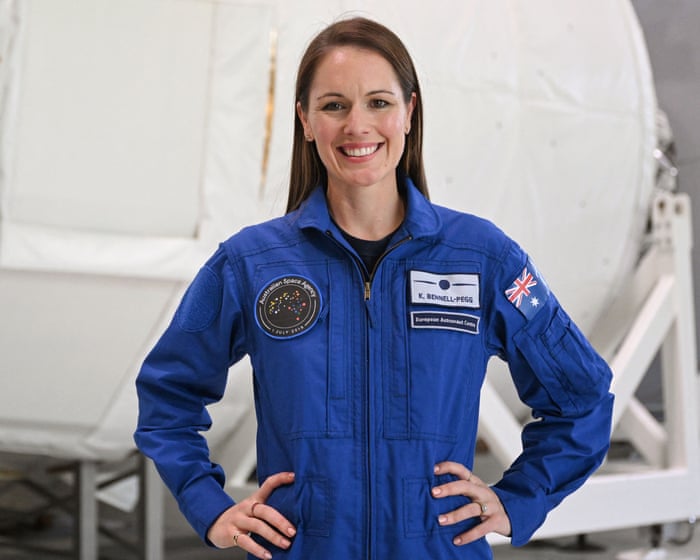
The federal government has formally submitted an offer to the European Space Agency proposing that astronaut Katherine Bennell-Pegg join a crewed flight to the International Space Station slated for 2028, according to Science | The Guardian. If the proposal is accepted, the recent Australian of the Year recipient would make history as the first person to fly into orbit representing the Australian flag.
The move marks a notable step forward for national space ambitions, building on previous educational outreach where pupils who designed a badge sent to space meet NASA astronaut to foster domestic interest in orbital science. Canberra's pitch to European space officials reflects an ongoing push to secure sovereign flight opportunities rather than solely relying on international partnerships without direct national representation.
Context and Significance
International space cooperation has long served as a diplomatic tool as well as a scientific engine, allowing middle-power nations to gain orbital access through shared infrastructure. For Australia, securing a national flag-bearing flight provides tangible proof of capability that can inspire younger generations, much like past interactions where an astronaut surprise video leaves pupils starstruck and highlights the real-world applications of STEM education.
The stakes for this mission extend beyond national pride into technical development and research access. Having an accredited astronaut on the International Space Station allows domestic researchers to run specialized microgravity experiments tailored to national priorities, ranging from advanced agriculture to remote medicine. Observers note that successfully placing a locally trained professional into orbit validates years of institutional investment in the domestic space sector.
What to Watch
Industry analysts will be monitoring the European Space Agency's response to Canberra's proposal over the coming months to see how flight rosters are negotiated. Observers should watch for formal announcements regarding crew rotations and mission integration timelines as the 2028 launch window approaches.
Sources: Science | The Guardian