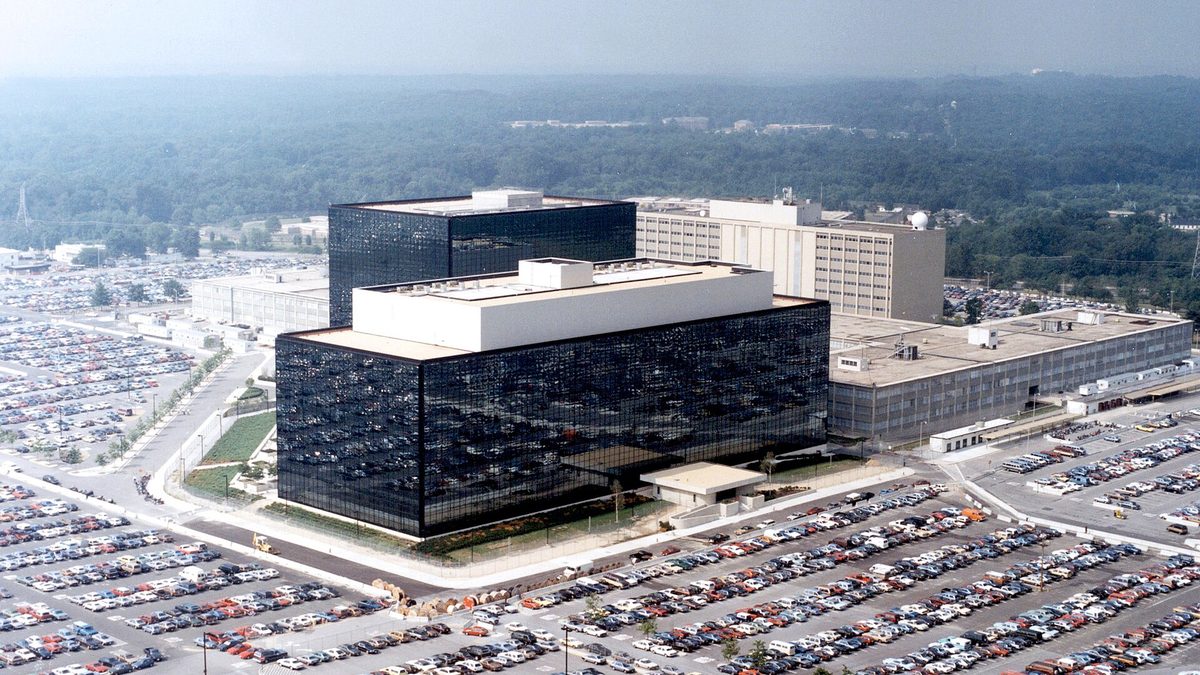
The highly classified network the National Security Agency uses for its internal communications went down on Tuesday, November 17, forcing the agency to close its Fort Meade campus in Maryland to most employees as technicians worked to restore it, according to CNN, which first reported the outage citing six people familiar with the matter.
The network, known as NSANet, is the NSA's internal system for exchanging top-secret and other classified information among its personnel. It is the backbone of the largest intelligence agency in the United States, which oversees global signals intelligence collection and the cybersecurity of government networks.
Thousands of employees rely on it every day to communicate and to access classified material. The NSA confirmed the disruption in a statement on Tuesday afternoon. "The National Security Agency experienced temporary degradation during scheduled routine maintenance," the agency said.
Also readNvidia CEO Jensen Huang is back. What happens next?
"While some internal systems were affected, mission-critical capabilities remain fully operational and our ability to defend national security continues." The agency did not say when the outage began, what exactly was being maintained, or when the network would be fully restored.
A source familiar with the matter told CNN that restoration work was still under way on Tuesday afternoon and had not been completed. The campus response escalated through the day. At first the NSA issued a yellow alert, the second level of its three-tier system, and told non-essential staff to report on a delayed, staggered schedule after noon.
By Tuesday night the Fort Meade campus had been placed under a code orange restriction, closing it to most employees and leaving only essential personnel on site, according to an employee voicemail inbox and a source cited by CNN. The reason for the reversal was not clear.
Director of National Intelligence Jay Clayton later offered a more specific explanation. He said on Fox Business that the outage followed the agency's attempt to install a software patch addressing major vulnerabilities discovered last month. The vulnerabilities are in PHP, a programming language that powers about 70 percent of the world's websites, and researchers found that artificial intelligence tools could be used to exploit the flaws, prompting government agencies and companies to rush out patches.
Clayton stressed that there was no sign of a cyberattack. "We see no evidence that this was a cyberattack," White House spokesperson Lauren Bis said, in remarks reported by CNN. Sources cited by CNN likewise said there was no evidence of an external hack. The NSA itself has not confirmed Clayton's account linking the outage to the PHP patch, leaving a gap between the intelligence chief's explanation and the agency's own public statement.
Crucially, the outage did not touch the intelligence-sharing network that links the United States with its closest allies. The Five Eyes system, which connects the United States, the United Kingdom, Canada, Australia and New Zealand, continued operating normally, according to a source from one of those countries and a former US intelligence official cited by CNN.
The disruption was also confined to the agency's internal network: public phones, home internet, banking and websites were unaffected. The incident is the latest in a remarkable run of technology failures in the United States. Seven major systems failed in six days, from November 12 to November 17, including Microsoft services, a nationwide air traffic communications failure that grounded flights for hours, a United Airlines system outage that hit pilot applications and crew communications, and the NSA's own classified network.
Officials say there is no evidence the outages are connected or the result of cyberattacks, but the cluster has fuelled warnings about ageing digital infrastructure at the heart of national security. The NSA outage also follows other high-profile technology disruptions this week.
Apple's iCloud, App Store and Apple Pay services suffered a widespread outage, and Google warned this month that it had observed what it called the first fully autonomous AI cyberattack, in which artificial intelligence carried out an intrusion without human direction.
What remains unknown is how long NSANet will take to come back fully online, and whether the patch that apparently knocked it out exposed a deeper fragility in the systems that protect America's most sensitive secrets. The agency has not given a timeline, and the campus remains under restriction while the work continues.
For an agency whose entire mission depends on secure, uninterrupted communication, even a temporary failure of its own internal network is a serious embarrassment, and it will face hard questions about why a routine patch could take down the system it was meant to protect.