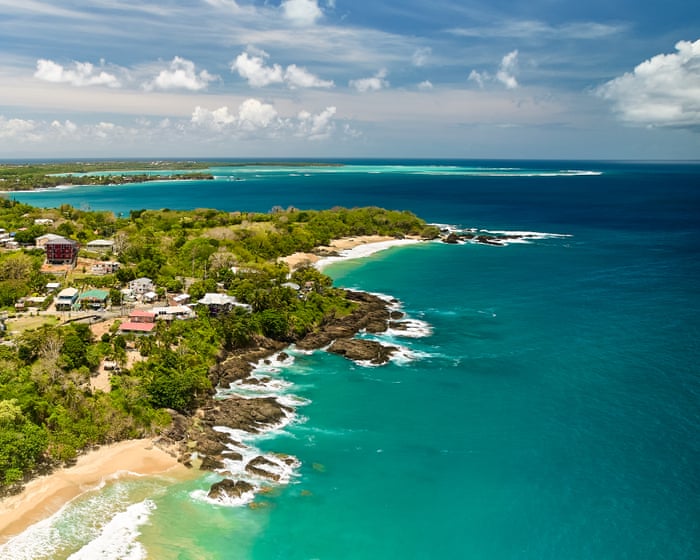
Plans for a 200-room project on an unspoiled beach have pitted developers against the conservationists fighting for smaller-scale schemes to protect the island’s habitat Visitors to Rocky Point in south-west Tobago are drawn to its sandy beach, fringed by coral reefs and dark rock formations and carpeted with the fruit-bearing trees found on Caribbean coastlines – almonds, sea grapes, coconuts, and the poisonous manchineel.
The beach is part of Back Bay, a 500-metre swathe of land, and trekking through its undulating terrain, thickly covered in bush and shrubs, feels akin to walking through a rainforest. But this still relatively unspoiled location is at the centre of a struggle between two opposing interests – those who see large-scale development as the most profitable path and those who believe smaller, incremental developments owned by the community would be best.
Continue reading...