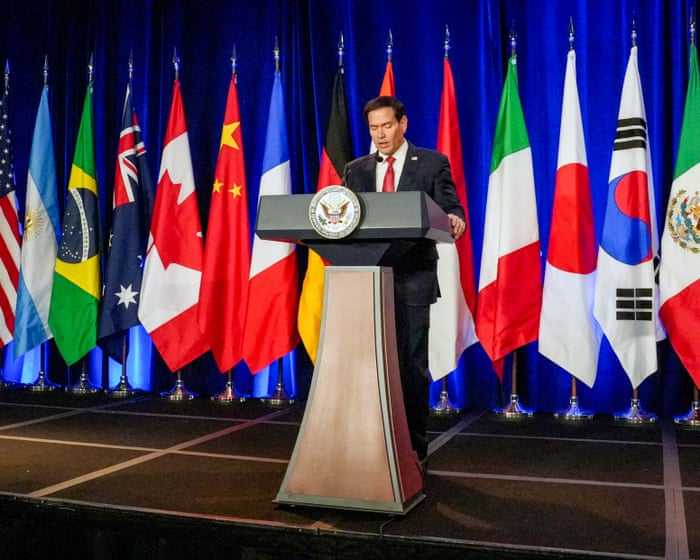
The traditional opening group photograph at the G20 foreign ministers' gathering has been scrapped by the United States following a threatened boycott by roughly one-third of the participating nations, according to World news | The Guardian. US Secretary of State Marco Rubio pulled the plug on the high-profile photo opportunity after multiple delegations raised objections to standing alongside Russia for the official snapshot.
The standoff centers on intense diplomatic friction over Moscow's ongoing war in Ukraine, which continues to deeply fracture multilateral summits and disrupt standard diplomatic protocols. Participating governments that pushed back against the joint image included close American allies such as the United Kingdom and Australia, reflecting a persistent refusal by Western capitals to normalize relations or engage in standard pageantry with Russian representatives since the 2022 invasion.
Historically, the G20 brings together the world's largest economies to coordinate on pressing global issues, but high-level ministerial meetings have increasingly turned into arenas for bitter geopolitical protests. Summit organizers frequently grapple with how to manage deep ideological divides without letting individual disputes paralyze broader economic and administrative agendas. When consensus fractures over representation, standard diplomatic traditions like group photos often become the first casualties of a broader breakdown in international cooperation.
Why This Matters
This diplomatic boycott highlights the profound paralysis currently affecting major international forums, where symbolic actions often outweigh substantive dialogue. For ordinary citizens and global markets, the breakdown in high-level consensus means that multilateral institutions are struggling to address pressing transnational crises, from food security to financial instability. When traditional allies like Australia and the UK must actively force the cancellation of a standard photograph to register their protest, it underscores a fractured international order where unified global governance is increasingly difficult to sustain. For more on these ongoing diplomatic strains, you can read our previous coverage on how a G20 'family photo' cancelled after protests over presence of Russian minister unfolded.
What to Watch
Observers will be monitoring whether this cancellation sets a permanent precedent for future G20 ministerial meetings and leader summits where Russian officials are present. Future diplomatic friction will likely center on upcoming multilateral communiqués and whether participating states can agree on joint language regarding security conflicts.
Sources: World news | The Guardian