The United States destroyed five Iranian oil tankers on Tuesday, and Iran retaliated within hours by firing ballistic missiles at an American base in Jordan, in the sharpest exchange yet of a Gulf war now in its seventh month. The overnight escalation spread across the region, drawing in Bahrain, Kuwait and Yemen-backed forces, and pushed oil prices higher as traders weighed the risk to one of the world's most important energy waterways.
Also readWhat strike on Russian ship in Libya says about spread of Ukraine war
US Central Command (CENTCOM) said in a statement late on Tuesday that Iran's Islamic Revolutionary Guard Corps (IRGC) had twice tried to target an American warship with ballistic missiles over the previous two days, but that the vessel "successfully evaded the attempted Iranian attacks".
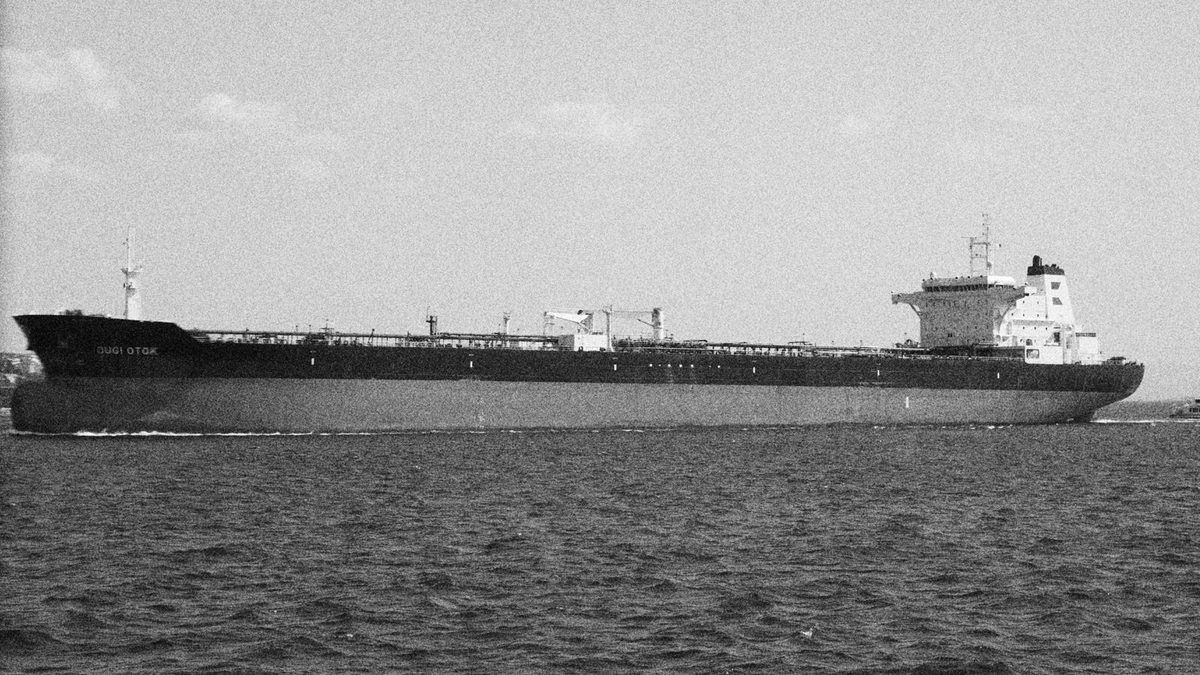
In response, American forces struck and destroyed four tankers in the Gulf of Oman — the M/T Kaviz, M/T Charminar, M/T Horizon 1 and M/T Riesco — and a fifth, the M/T Derya, near Kharg Island, Iran's main crude export terminal in the Persian Gulf. According to Zee News, CENTCOM described the ships as tied directly to the Guard's oil-smuggling network, and said crews had been ordered to abandon the vessels before they were disabled or set ablaze.
Also readIsrael seeks to jail Palestinian student activist without trial after dorm arrest
Tehran did not wait long to answer. Iran's state media said the IRGC subjected the Al-Azraq air base in Jordan, which hosts US fighter squadrons, to what it called "fierce missile strikes", and claimed that hangars used by American jets had been destroyed. Jordan's armed forces gave a different account: its air defences intercepted 18 of the 20 incoming missiles, with the other two falling in unpopulated desert, and no casualties were reported.
CENTCOM, asked about the strikes on the Jordanian base, said it had no information to offer. The IRGC also claimed it had attacked ten ships near the Strait of Hormuz and hit two American destroyers, the USS Delbert D. Black (DDG-119) and the USS Mitscher (DDG-53), causing what it called "significant damage" to the vessels.
Those claims had not been confirmed by the Pentagon, according to Al Jazeera, which reported that Washington had offered no verification of damage to either warship. The competing claims underline how much of this war is now fought in public statements as well as at sea, with each side seeking to shape the narrative of every exchange.
The fighting did not stop at the tankers and the Jordanian base. American forces also struck a missile launch site on Iran's Qeshm Island, in what US officials described as a self-defence action against an IRGC missile base. Bahrain said it had intercepted a second Iranian drone attack in three days, this time aimed at a US radar system at the Sheikh Isa air base — a claim of a direct hit that CENTCOM denied.
Kuwait's air defences intercepted hostile drones on Tuesday night, and Iran announced a maritime restricted area stretching from Chabahar into the Gulf of Oman and the Arabian Sea. Reports also said Iranian-backed Houthi forces in Yemen attacked four cities in southern Saudi Arabia, wounding 73 people and setting oil installations on fire.
The escalation carries a direct cost for the world economy. International benchmark Brent crude briefly rose to $99.46 a barrel on Tuesday before closing up 0.76 percent at $93.14, as traders priced in the risk to shipping through the Strait of Hormuz. About one-fifth of the world's oil flowed through the strait before the war began, and Tehran has closed it while Washington enforces a naval blockade on Iranian ports — a standoff that has already forced the US military to escort a limited number of ships along a route off Oman.
Tuesday's strikes were not the first of their kind. On Saturday, the US military said it had struck three Iranian oil tankers after Navy warships came under ballistic missile attack, warning that it would, "if necessary, destroy Iran's limited and exposed oil fleet".
With Tuesday's five, eight Iranian tankers have now been destroyed in a matter of days. US Secretary of State Marco Rubio said Washington would not allow Iran's attacks to go unanswered, while the IRGC Navy warned crews aboard oil tankers near ports in Kuwait and Bahrain to leave their vessels immediately, saying the ships could be targeted in retaliation.
The wider war, which began on February 28 when US and Israeli strikes killed Iran's supreme leader and other senior officials amid collapsed nuclear talks, has now run for more than six months, with a ceasefire in the spring giving way to renewed fighting. The conflict has also reached beyond the battlefield: Iran has refused to let UN nuclear inspectors into its damaged atomic sites until the war ends permanently, as Global Wire reported earlier this week, leaving the international community unable to verify the status of key nuclear material.
All eyes now turn to Thursday, when the leaders of China, Russia and the United States meet in Shenzhen for the first trilateral summit of its kind. President Donald Trump is expected to raise the war in Iran — alongside Ukraine and nuclear arsenals — with President Xi Jinping and President Vladimir Putin, as Global Wire reported.
Whether the summit can produce even a pause in a war that is escalating by the day remains an open question, and the overnight exchange has made the answer harder, not easier, to predict.