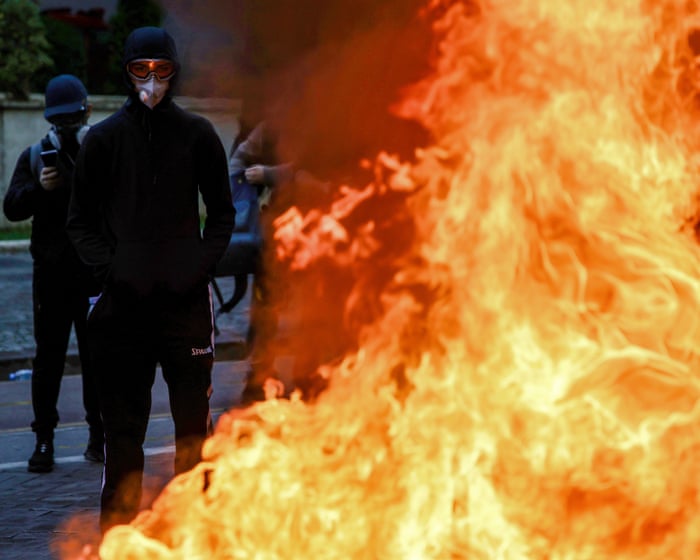
Albania has instituted steep financial penalties reaching upwards of $6,000 for individuals who attend demonstrations that subsequently escalate into violence, according to World news | The Guardian. Under the newly enacted measures, the penalty applies automatically to anyone on the scene of a disrupted demonstration, regardless of whether that specific person engaged in any destructive or unlawful behavior themselves.
The publication notes that the financial penalty is exceptionally severe, amounting to roughly six times the typical monthly salary in the country. This policy places collective liability on all assembly attendees if public order breaks down during a gathering, raising immediate questions regarding freedom of assembly and civil liberties. The legislation arrives as governments globally grapple with how to manage increasingly tense public demonstrations, sparking debates familiar to observers of modern civic unrest, such as those seen when public figures weigh the long-term personal and professional costs of protest against state restrictions.
Understanding the Stakes and Public Reaction
The introduction of such a heavy financial sanction alters the calculus for ordinary citizens wishing to exercise their democratic rights. According to the report states, critics and civil rights advocates argue that penalizing passive participants for the actions of agitators or police clashes will effectively deter lawful public dissent. When the penalty for standing in a crowd that turns volatile equals half a year of average earnings, the economic risk of participating in political speech becomes prohibitive for working-class citizens.
This tension between maintaining public safety and safeguarding fundamental rights is a persistent challenge for emerging democracies in southeastern Europe. Governments frequently face pressure to crack down on property damage and civil disruption during political rallies, yet measures targeting general attendance rather than individual misconduct risk chilling free expression across the board.
Outlook and What to Watch
As the law takes effect, legal scholars and human rights monitors will closely observe how enforcement is carried out on the ground. Observers will be tracking whether law enforcement agencies issue these steep fines indiscriminately during large-scale gatherings or if the policy faces immediate challenges in domestic courts over constitutional protections.
Sources: World news | The Guardian