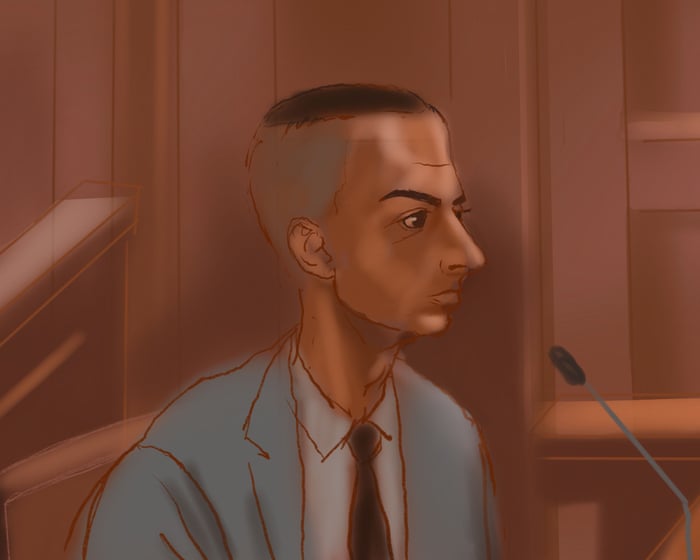
A leading forensic expert has challenged the official finding that Jeffrey Epstein died by suicide in his prison cell, saying a fresh examination of the autopsy evidence points instead to homicide by strangulation. Professor Michael Freeman, a US forensic medicine expert, told the BBC's Newsnight programme on Monday that he believed Epstein was killed, most likely strangled from behind, and that the injuries recorded after his death do not fit the account of a man hanging himself.
Also readIranian singer and four others receive lashes after performance without hijab
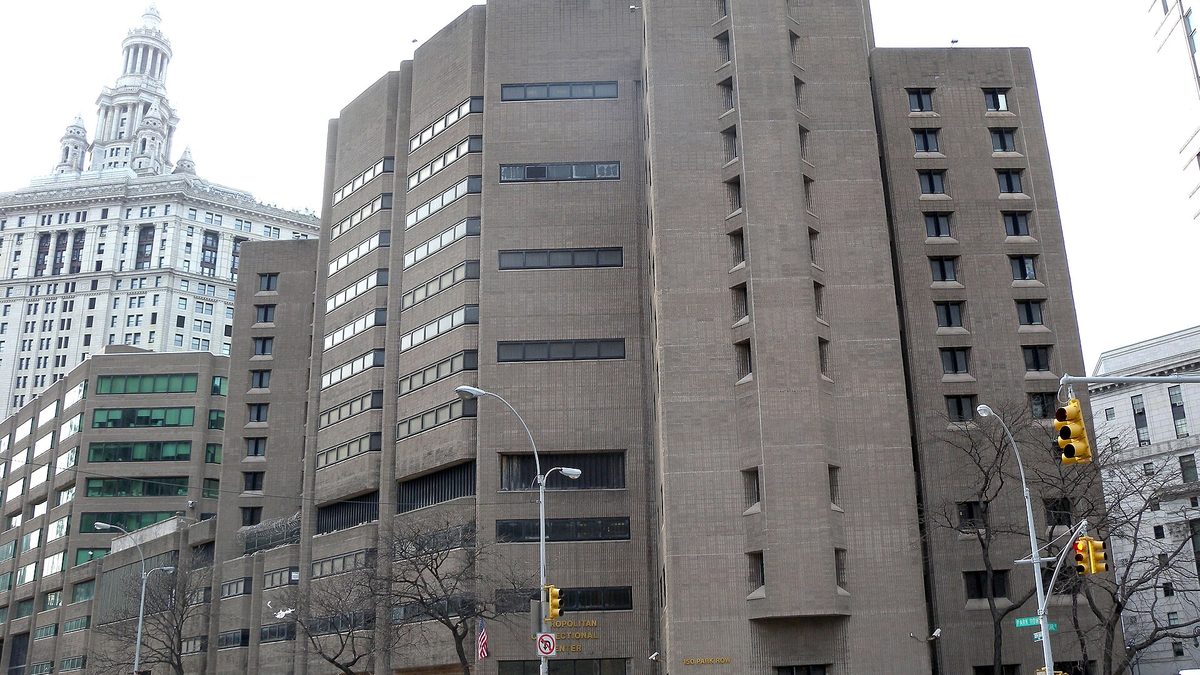
Freeman presented his findings in London on Monday before publishing his research and the New York City medical examiner's files. Epstein, the disgraced financier, was found dead in his cell at the Metropolitan Correctional Center in New York on August 10, 2019, while awaiting trial on federal sex trafficking charges.
The medical examiner who conducted the autopsy ruled the death a suicide by hanging and said there was no evidence of the defensive wounds typically expected in a homicide. Freeman's review, built over months of work on autopsy photographs and the medical examiner's records, reaches the opposite conclusion.
Also readWhat strike on Russian ship in Libya says about spread of Ukraine war
He said the photographs showed a deep haemorrhage to Epstein's left shoulder and marks that appeared consistent with blows to the face, injuries he argued point to an assault before death. He also pointed to what appeared to be fingernail marks above the ligature mark on Epstein's neck, which he said suggested Epstein had tried to pull the ligature away from his throat as he struggled.
According to Freeman, the evidence indicates that a ligature was used to strangle Epstein and that the same material was then used to suspend his body from the bunk bed in his cell, creating the appearance of a hanging. "The injuries and the way the body was found don't match up," he told the BBC.
"There's only one remaining explanation then, and that is that the death was as a result of a homicide." Freeman worked with forensic medicine professor Anders Eriksson and bias researcher Itiel Dror, and his team built a biomechanical three-dimensional model based on Epstein's anatomy to test how the injuries could have been caused.
The model, he said, supported strangulation from behind with a narrow, knotted fabric ligature rather than a self-inflicted hanging. He also noted that investigators examining a death by hanging in custody would normally have photographed the body before it was moved, and said he would have expected such a photograph to exist.
The new analysis comes with important limits, and Freeman himself has been open about them. He did not examine Epstein's body, and his assessment rests entirely on photographs and documents supplied by Epstein's brother, Mark Epstein, who has long maintained that his brother was murdered.
Freeman said his research was independent and that he was not paid by Mark Epstein, but his findings have not been peer-reviewed. One academic journal rejected the paper, with reviewers saying it was inappropriate to criticise a medical examiner's findings in a peer-reviewed venue, and Freeman said he planned to resubmit it.
Asked who might have killed Epstein if his interpretation were correct, he said he had "no idea". The official position has not moved. Dr Barbara Sampson, who was New York City's chief medical examiner at the time and performed the autopsy, has previously said she stands firmly behind the determination that Epstein died by suicide.
She told the US Department of Justice's Office of the Inspector General that his injuries were more consistent with suicide by hanging than homicide by strangulation, and that there was no evidence of defensive wounds associated with strangulation victims. The New York City Office of the Chief Medical Examiner reiterated its position this week, telling CNN that it "stands by its determination" that Epstein died by suicide by hanging, and declined a fresh interview.
This is not the first time the suicide ruling has been publicly challenged. In 2020, Mark Epstein hired forensic pathologist Dr Michael Baden, who also argued that the neck injuries were more consistent with homicide. At the same time, other evidence has pointed the other way: a New York Times review of tens of thousands of newly released pages of Epstein's own notes found signs that he intended to end his life.
The gap between those two readings is why the case has never settled in public debate, and Freeman's analysis revives it with a detailed, injury-by-injury critique that the medical examiner's office has so far answered only by restating its 2019 conclusion. For now, the ruling stands as suicide, and Freeman's conclusion remains a disputed expert opinion rather than an official finding.
But the publication of his research, the medical examiner's files and the three-dimensional reconstruction gives the public a fuller picture of the evidence than it has had before, and it puts a direct question to the authorities who investigated the death: whether the injuries documented by their own office can still be explained as a hanging.
Until the medical examiner answers that critique in detail, the most famous jail-cell death in recent American history will remain an open argument. Global Wire also reported this week on Warren Buffett's $5.47 billion donation, the largest single Thanksgiving gift of his long campaign to give away his fortune.
Readers can also follow our coverage of Apple's services outage, which took down iCloud, the App Store and Apple Pay for users around the world. For a detailed explainer of Freeman's findings and the injuries he cites, see Firstpost's account of the case.